Extended Charles

I finally got around to checking the Watertown side of the Charles on Saturday. Nothing unexpected but there was a good lesson in there.

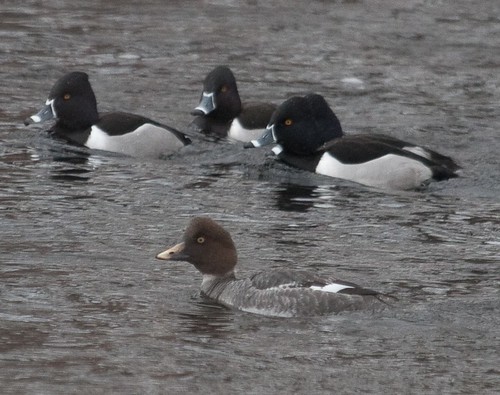
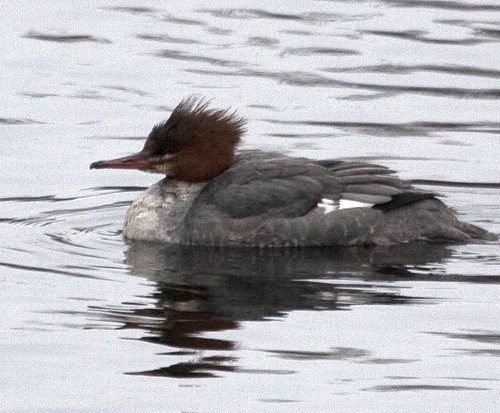
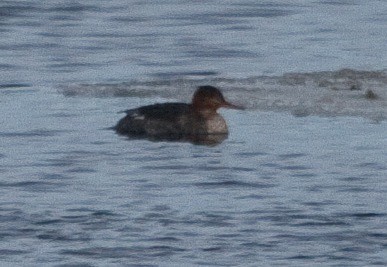
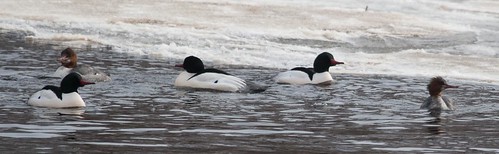
At the bridge over the river, I had one Ring-neck, a couple Hoodies, and at least 15 black ducks mixed in with the Mallards. Crossing the bridge, I decided it was probably a good idea to put on the yaktrax-type things (first time I’ve done so and they’re well worth it). Down at the first overlook there was a small flock of Common Mergansers. On a later scan, one of the females looked a bit smaller and thinner-billed and had a dusky chest. Red-breasted! A quick snap or two and off I went.

Merganser Mix?

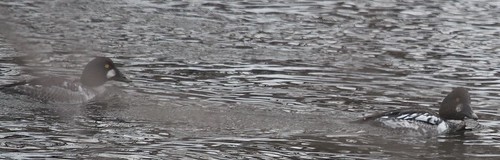
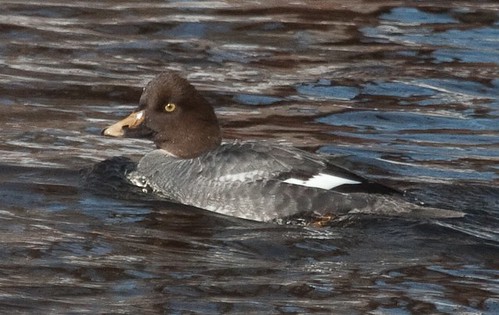
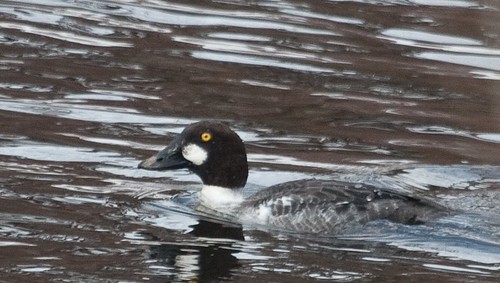
Further down was a flock of Ring-necks and a young male goldeneye.

Young Goldeneye

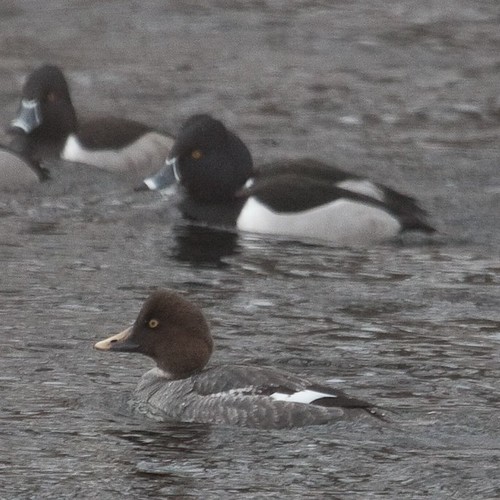
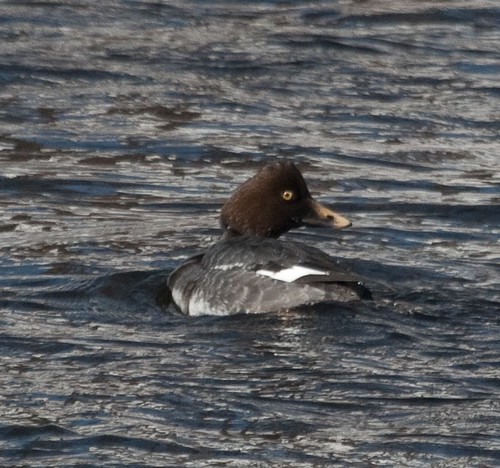
Reaching Bridge St, I moved to the other side of the river and headed back. A Cooper’s was feasting (bad light so no photo right now). Back at the Ring-necks, I noticed a second young goldeneye.

Goldeneye

The merganser was here as well (at least it wasn’t back with the others so I assume it was the same).

With the Watertown section completed, I decided I might as well check the Waltham side too. A couple Fish Crows were calling in the parking lot and most of the Mallards and geese were on land. Down at the Newton St overlook were the two coots and a few Ring-necks.

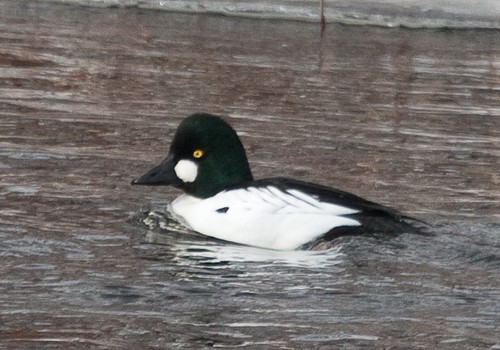
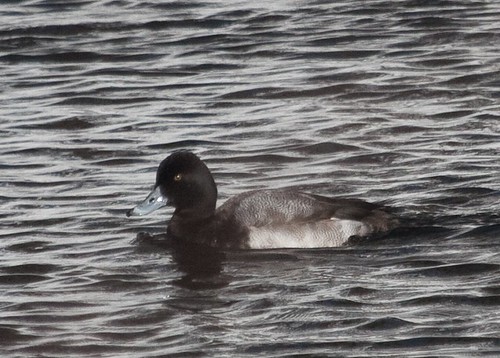
Crossing over, there were about 30 more Ring-necks here (no scaup though) and a couple more goldeneye including an adult male.

Common

I decided to continue walking to Moody and Prospect St. That part’s still totally frozen and there were no interesting gulls on the ice. At the little opening by Prospect St, I found one Common Merganser in with the Mallards and after extended scanning, finally picked up the American Wigeon. On the way back, two Fish Crows were chasing a Red-tail around. At the fruiting trees I heard a waxwing and eventually found a flock of about 16 nearby. Hopefully they’ll take a few days to get through all the food.

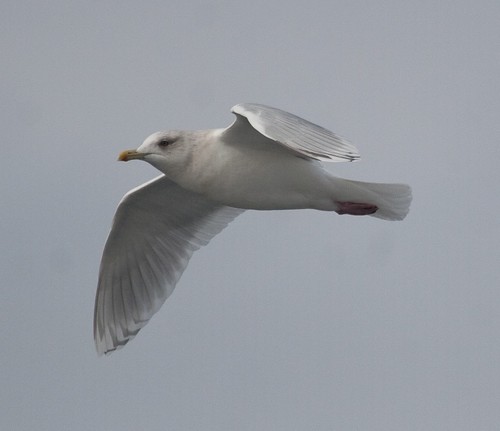
Back at Elm St, the yellow-billed goldeneye was back and looked slightly more like a Barrow’s today (comments please).

Goldeneye

Goldeneye

Pretty quiet from here back to the car. However, at the bridge there was a close merganser that I presumed was again the same.

Merg

Back at the car, I spent a few minutes going through the gulls (a Russo’s truck was dumping baked goods and created quite a frenzy). Nothing unusual and I couldn’t refind the tagged one but Fish Crows were up to 5. From here it was back home.

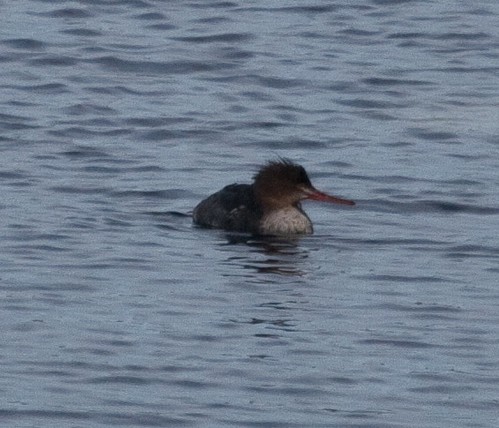
Back at home, I quickly downloaded photos and sent out a quick message. A few hours later I went to enter the day into Avisys and pulled up the photos again. Suddenly the bill on the merganser didn’t look quite so long and thin and the first shot was showing a really strong contrast between the head and neck. Outside of the chest and white loral stripe, it looked pretty normal for a Common. Guessing a bit of retained juvenal plumage (and the small size means it was a late hatch?). Another reminder to go over every feature.

Charles Winter Birds

A few shots from today along the Charles

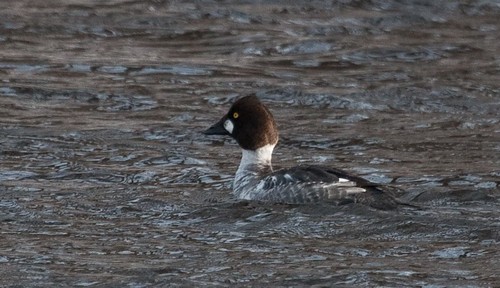
Goldeneye

Young male Common Goldeneye

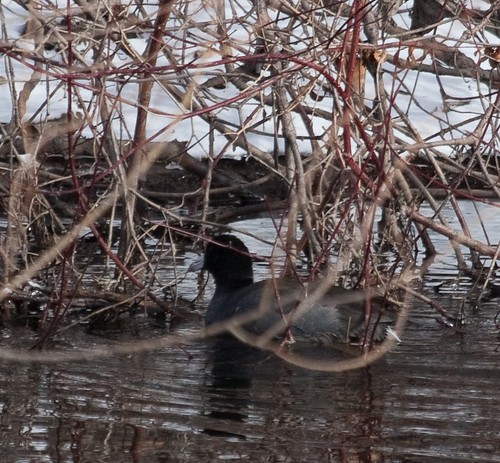
Coot

American Coot hiding

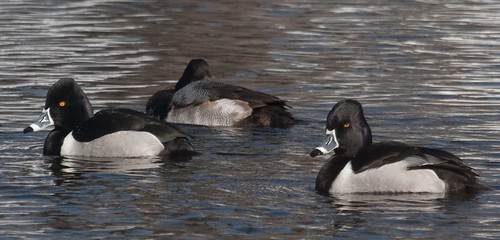
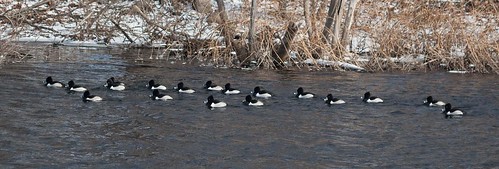
Ring-necks

About half the Ring-neck flock

Merg #1

The day’s highlight, a Red-breasted Merganser (my second along the river)

Merg #2

And my third a few feet away

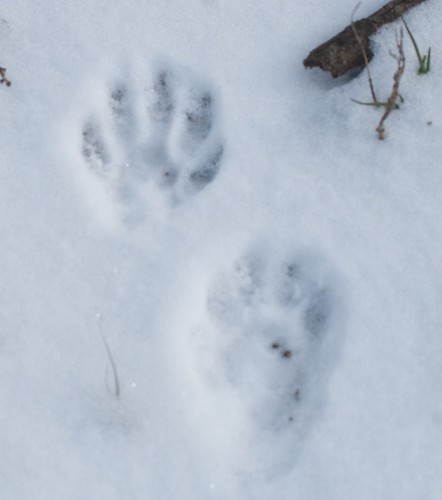
Tracks

Raccoon? tracks

1649 checklists?

Since I apparently submitted 1649 checklists to eBird last year, I figured I should explain how.

Some background first: A number of years ago, I went to see what my month lists looked like (actually half-months). According to my records, I had never seen a pigeon in September and there were many similar gaps. In order to avoid this, I decided that I would record every bird every day (and since I was at RPI for the next couple Septembers, it took several years to close that hole).

So, for the last few years, I’ve compiled a daily yard list, a daily work list, a daily driving around list, and normally a daily walk-around-the-neighborhood list. They all sort of fall in between casual observation and any of the other eBird categories (I try to count everything but don’t track time for the most part).

Of those 1600+ checklists:

342 were from the yard

213 from the neighborhood (plus a few from Hardy Pond instead)

162 were at work (plus a few from other schools)

243 were driving around Waltham (and a few from Lexington, Belmont, etc and Middlesex, Essex, and Worcester counties)

That’s almost 1000 right there. Add in the fact that I try to go out on my lunch break daily and do 20 minutes of birding (probably 200-220 days) and it’s probably about 400 full birding trips. Still a good number but not anything like 1600 implies. Breaking places up adds up as well (for example, Beaver Brook North is one place but I have separate checklists for Lot 1, the West Meadow, and Met State for town lines and other reasons).

Greater Boston CBC 2010

Last Sunday was the Greater Boston Christmas Bird Count. As usual, I led the Waltham section. We had a mixed day, on the lower end for diversity (well technically exactly average) but had many high counts.

The day started at 5AM, when I walked down the street hoping the Great Horned Owl would be calling. No luck with that and no luck trying a screech-owl recording at Graverson, so back home to rest for a few minutes.

Out again at 7 to meet the group. All ready and off to our first stop by 7:30. Dunback was pretty quiet. Nothing in the woods. Lots of juncos in the gardens and one of yesterday’s sharpies was around but not much else. From here, we split up. I headed to Lot 1 with Christine and Lew while my parents, Barbara, and Mark worked Beaver St.

After dropping a car at the McLaughlin building, we started walking around Lot 1. We found a few waxwings at the pond and a Hermit Thrush at the edge of the big field. The woods were pretty quiet, so we headed to the West Meadow. Lots of robins and starlings just before the boardwalk (and a Canada Goose with them). A flicker flew over the boardwalk. The path out to Dawes was very icy, so we took the long loop. That turned out to be a good move as we found a large flock of Tree Sparrows along the parkway. More tree sparrows and a ton of juncos were around the building but not a whole lot else. We drove back to Lot 1, checking a couple feeders on the way.

Christine had to leave, so Lew and I headed to the Fernald to meet the rest of the group. The geese were not in the usual spot but we found them further down (and assumed the number was the same as Saturday). Since the others were a bit behind and there was nothing here, we changed plans and met up at the Gore Estate. Lots of geese on the lawn and a few doves around but much quieter than it had been. Part of the reason became obvious when a Cooper’s Hawk popped up as we were ready to head out.

From here, we headed to Wendy’s for a lunch break. Judy and Nancy were already there. They had the best day out of all of us, with a Pine Warbler at Prospect Hill and two pintail in front of the Y (the other group had a bunch of cowbirds at the field station but not much else).

After lunch, we hit the Charles, which was very quiet. No ring-necks and no herons. Did get one Common Merganser and a few Hoodies. The Moody St to Prospect St loop was on the quiet side as well, no Great Black-backed Gulls and no interesting ducks. There was a single tagged Ring-billed Gull, which was banded in Worcester in January and seen in New Brunswick in August.

Since we still had some time, we ran up to the Woerd Ave boat ramp where we finally found a Ring-necked Duck. Then it was back to the cars and the end of the day. I took a quick swing around, hoping to add pintail to my personal CBC list without luck.

Overall, 39 species including 3 new to the section. For a few days, the Purple Finch we had on Saturday was a count week bird, but someone did report one from Sunday eventually. A quick count of my results spreadsheet showed that we had about 12 high counts for the section (based on my numbers, so not official before 2004 and lacking the early years). With decent weather it was a very enjoyable day.
Bird of the Year 2010

For the 10,000 Birds Best Bird of the Year post:

With 21 life birds, 10 state birds, 5 county birds, and 6 city birds, not to mention reacquainting myself with an additional 310+ species, there’s lots to choose from.

So the runners up…

Top life birds: Pink-footed Goose, Roseate Spoonbill (photo from later), Great Skua, Northern Jacana, Upland Sandpiper

Massachusetts birds: Sage Thrasher (oops, never posted much about this one), Curlew Sandpiper

Middlesex county: Yellow-crowned Night-Heron, Laughing Gull

Waltham: Black and Common Tern

Reacquaintances: Long-billed Curlew, Baird’s Sandpiper, Hudsonian Godwit (oceanic migrants), Hooded Warbler

But the overall best bird of the year is a tie between

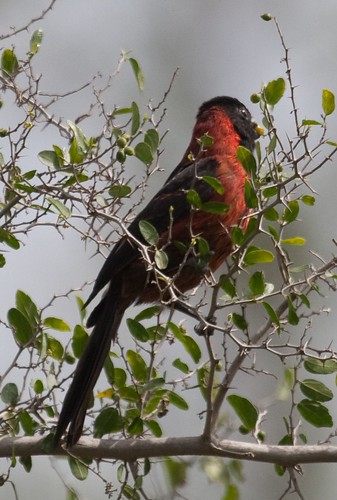
Crimson-collared Grosbeak

Crimson-Collared Grosbeak

and

White-faced #3

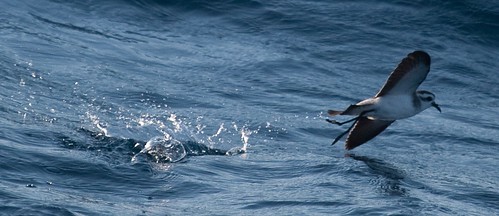
White-faced Storm-Petrel (all 8 (or 22!) of them)

Check Every Bird

Based on a discussion from today’s sightings, a couple points that are worth repeating every so often:

Check every bird
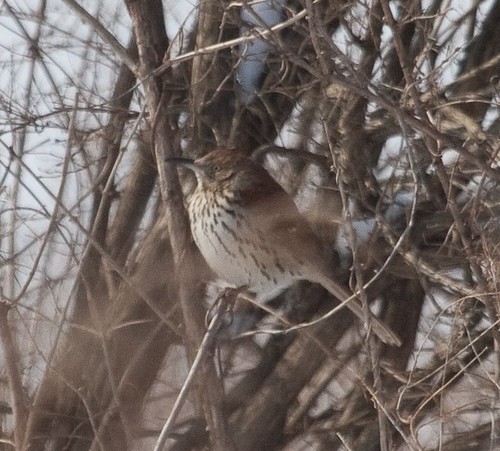
Walking around Hardy Pond today (after a 7:30 AM reverse-911 call warning of icy conditions), I watched a medium-sized hawk fly up and land on a pole. Almost certainly a Cooper’s, but I took a closer look. Hmm, Buteo. With a lot of streaking on the front. It flew into the yard across the road. Crows saw it and chased it off, but not before I got a good look at the tail, enough to say Red-shouldered. Waltham bird #190!

It wasn’t that nice out (raining a bit, although not icy, no idea what the call was for), so I easily could have said Coop and not taken a closer look.

Know the Common Birds
I’ll be honest and say that I did almost pass by the hawk (or at least wasn’t going to look until I was much closer, at which point it probably would have flown off). But something looked slightly off, so after a few steps I did stop and check it out. Without knowing Cooper’s and Red-tailed well, I wouldn’t have picked up the slightly different shape.

You don’t have to know every bird, but knowing the common ones means the less common ones stick out. For another example, see the Cerulean. Even though I didn’t recognize the song, I knew it wasn’t one of the common ones and chased it down. And of course, Harry is another example.

So, take a few minutes and check out the flock of House Sparrows at your feeders. They’re incredibly variable, spend some time comparing different individuals. Learn what they look like from every angle. There may not be a Chaffinch or other rarity (coincidentally posted today) there now, but one of these days there will and if you’re not careful it may slip right by.

Harry Day

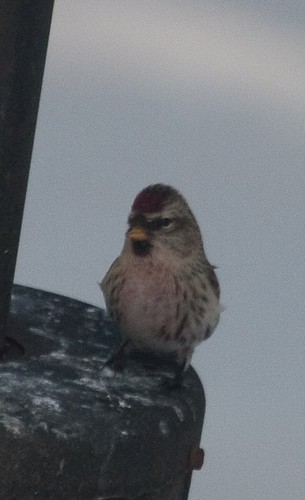
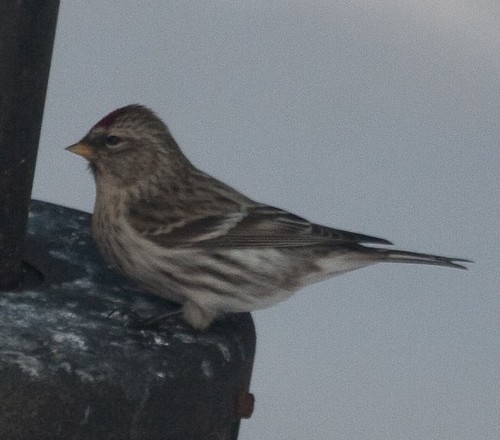
Today’s the one year anniversary of Harry showing up. Since I never got around to writing up the banding process, I figured this would be a good time to do so.

The process began when Trevor Lloyd-Evans, banding director at Manomet, came by to drop off a couple traps. We set them out under the feeders (unarmed) and gave the birds a couple days to get used to them, hoping that the bird would hop in and then be easily captured. However, the birds didn’t like them and stayed away.

We removed the traps and headed off to Texas. On return, he was waiting, so we made some quick arrangements and Trevor came over the next day (with Marj to help document the process).

Trevor arrived and we began to set up a mist net. Fortunately, we had a fairly clear path and the ground wasn’t that frozen, so we had the net up pretty quickly. We then retreated to the house, expecting to be spending the morning plucking House Sparrows every few minutes.

Instead, we looked out and saw something in the net that had a reddish look: Harry. We rushed out and Trevor got him out and bagged him:

IMG_4612.jpg

After stowing him away, we ran back out, plucked the couple White-throats out (no House Sparrows!) and then took the net down.

IMG_4614.jpg

With that done, we began the banding process. We started by examining the feathers:

IMG_4618.jpg

Note the damaged primaries.

IMG_4620.jpg

We then took feather samples for isotope testing (belly here). Tests are still pending.

IMG_4622.jpg

Tail clipping here.

IMG_4627.jpg

See the contrast in the inner tail feathers, apparently a characteristic of the genus.

IMG_4629.jpg

Next, we measured…

IMG_4633.jpg

many different things.

IMG_4639.jpg

And weighed him.

The band was then applied (for some reason I don’t have a photo).

And then we brought him outside for a couple more pictures.

IMG_4652.jpg

And then he was handed to me to be let go (photo obviously by Marj).

JasonReadytorelease3.JPG

The remaining equipment was taken down and we went inside for breakfast.

Trevor sent along his report a few days later, a very healthy bird (on the fat side actually).

For a few more photos, see Marj’s page.