Took a few tries (midday heat and checking 20 yards over) but finally found the Yellow-throated Vireo this morning.
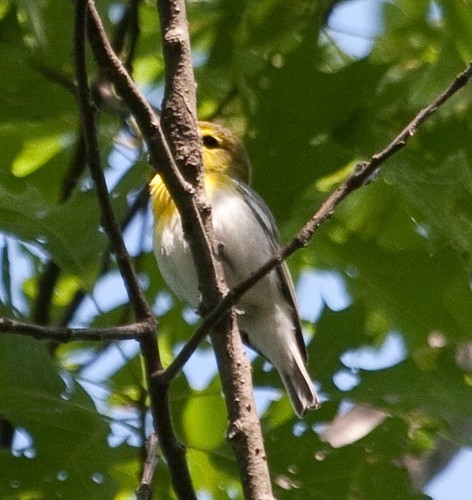
Parking lot is in Waltham, so standing there until he sang got me #185.
Took a few tries (midday heat and checking 20 yards over) but finally found the Yellow-throated Vireo this morning.
Parking lot is in Waltham, so standing there until he sang got me #185.
Finally, a 2010 tick.
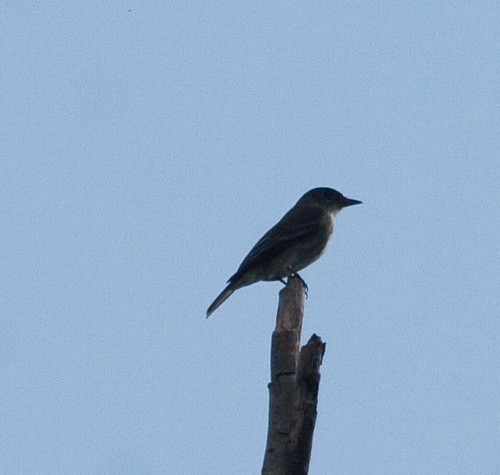
Olive-sided Flycatcher, Metropolitan Parkway South, #184 in Waltham (thanks Paul)
Into the afternoon sun at a good distance so this is the best out of 15 or so shots.
Saturday was Mass Audubon’s annual birdathon. Because I lead the Sunday Mt. Auburn trip, I try to avoid going all out and decided to stick to Waltham as much as possible.
The event actually starts at 6PM Friday, so I stepped outside just after 6 to get the yard birds out of the way. The fourth bird I saw was an Osprey, only the second yard record! It circled a bit and after being slightly confused about how it was moving, I realized there was a second bird following it!
Since my mother’s taking an art class and takes the bus from Waverly, we headed to Beaver Brook early (she can walk over from there). It seemed a bit quieter than it was on Friday, but I got a few warblers including the Magnolia in the same spot. I heard what sounded like another Magnolia nearby but spent a few minutes trying to see it. That proved to be a good idea as a White-crowned Sparrow popped out of the bushes before the Magnolia did.
The next stop was the Beaver Brook Ponds, where I had the only Red-eyed Vireo, Spotted Sandpiper, and Solitary Sandpiper of the day and not much else. From here, I was dropped off at Rock Meadow and began to walk home (so much for taking it easy). The first bird out of the car was an Indigo Bunting, but after that the wind got in the way. I did have a Brown Thrasher, 2 Bobolinks, and a pair of Orchard Orioles but not much else.
Moving on to the shelter of Met State, it was fairly quiet for a few minutes but reaching the hill things got interesting. About halfway up I heard an interesting call note that I assumed was a thrush. Waiting for it to appear, I ended up with an Ovenbird and Canada Warbler (greenway tick #1). No idea if one of those made the call or not. Further on, I got a bit distracted by butterflies including my first Little Wood Satyrs of the year and a bunch of Hobomok Skippers.
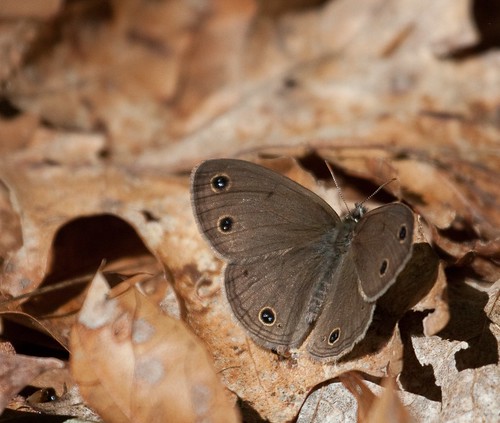
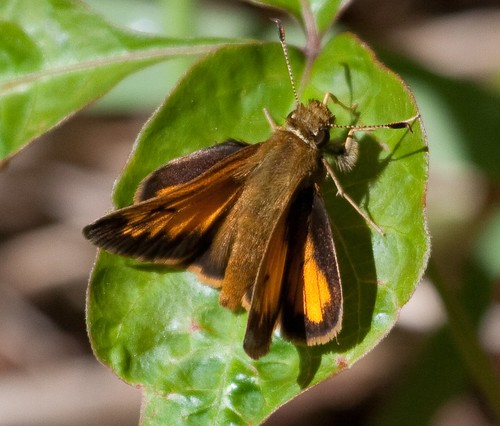
The Blue-winged Warblers were quiet here, but Indigo Buntings and Rose-breasted Grosbeaks weren’t. Moving past the water tower, I heard a loud song coming from the side of the hill. It sounded a lot like a Hooded Warbler but I couldn’t find it. I decided to try from below and rushed down and around but couldn’t find it there either. Circling back up, it was still singing so I bushwhacked in a bit until I got stopped by a large raspberry patch. Fortunately that was far enough in.

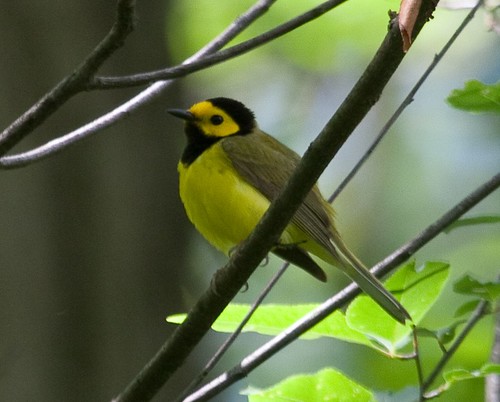
After watching him for a few minutes, I moved on. The parkway was fairly quiet beyond a Killdeer, so I crossed to the West Meadow.
The marsh is still pretty battered and there wasn’t a whole lot there, so I moved through quickly. In the short stretch of woods on the other side, I was rather surprised by a singing Bobolink. No luck finding it through all the leaves though.
Moving on to Lot 1, I bushwhacked up. In the woods I found a redstart and down at the meadow, a Blue-winged Warbler finally sang. The pond had a family of Wood Ducks but not much else, so I headed home.
After a quick snack break, we headed out to pick my mother up. A quick circle of the hill at Met State failed to find the Hooded again, so it was home for lunch and then out again for the afternoon.
The first stop was Prospect Hill. Butterflies were fairly good, but other than a Pine Warbler I found very little so we moved on to the Charles. The usual birds were out and a Barn Swallow was a bonus flyover.
At home, I did a quick tally and found I was in the mid 60’s, so with a few minutes left took a quick walk to Hardy Pond for Mute Swan and Double-crested Cormorant. House Finch on the way back was the final new bird of the day.
Of course, upon sending in the list, I entered the data and immediately noticed I left the 3 shorebirds and Savannah Sparrow off, so I actually had 71 on the day. Even better than I thought. Ad with a little more effort another 5-10 species would have been gettable, so well into the 80’s should be possible.
So there’s been more than a few hints that I’ve been keeping something quiet for a few months and I finally more or less revealed what is was the other day. Now, here’s the story.
December 1st was a pretty typical Tuesday. I got up around 7, checked the feeders quickly, read the paper, ate breakfast, and got ready for work. There was nothing at the feeders when I looked, so the House Sparrow that was sitting outside the sink window as I got my lunch together was the first bird of the day. It flew a few feet and I noticed a bit of white in the tail and wings. That probably should have been a sign to look closely, but I just assumed it was last year’s leucistic bird returning.
Five minutes later, I headed out the door to work. I immediately heard a chirp that sounded different from everything I’ve heard 1. The ‘sparrow’ flew up into one of the trees and I scrambled to get my binoculars out. I’m still not sure what I expected to see (obviously something new for the yard) but not anything close to this:
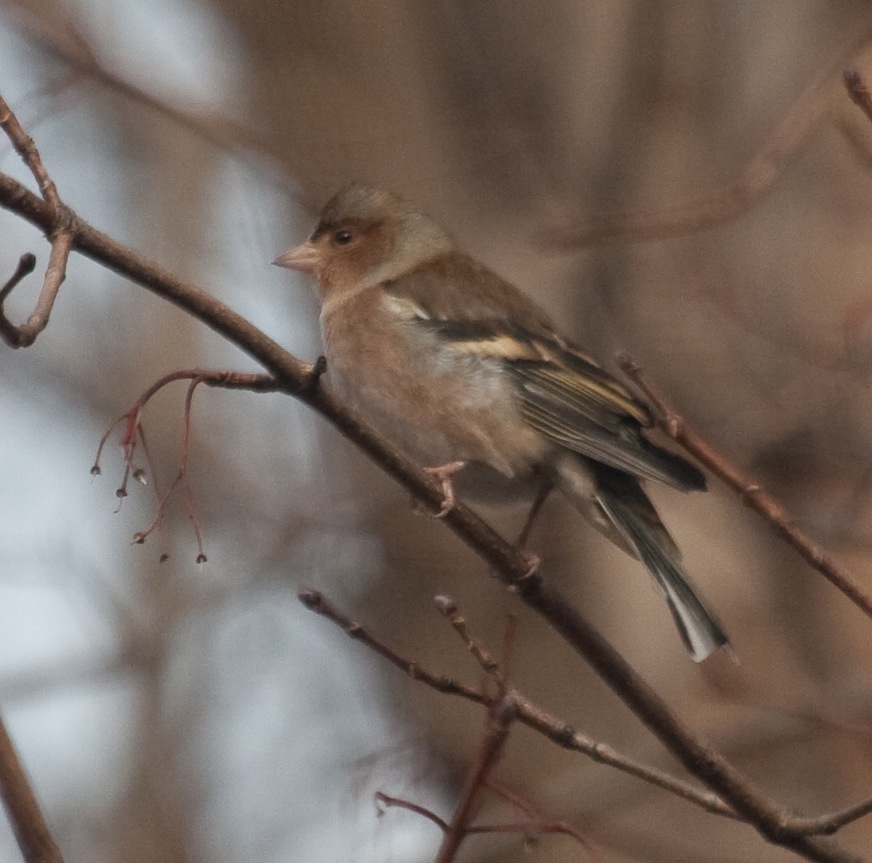
For some reason, even though it had been about 12 years since I had been to Europe, that collar stuck in my memory and I remembered Chaffinch. Rushing back inside, I ran for the camera but the bird apparently moved and I couldn’t find it quickly. After a quick reference check to make sure I was thinking of the right bird, I headed off to work, leaving instructions to keep an eye out and call me immediately.
At work, I made a quick sketch and emailed my friend Marj. Then I waited (and didn’t accomplish much). Finally (4PM and approaching dark), my parents called and said it was on the deck. After quizzing them, I left them to get pictures. I’ll just say it’s fortunate that we had another couple months to improve on those.
Wednesday morning, I was up early. The bird was as well, on the deck at 6:45. Marj arrived a few minutes later and he (as we now realized, my brief views the day before left me thinking it was a female) came back and forth, allowing for easy study. I sent an email saying that I would be late for work and Marj called our friend Bob, who rushed right over.
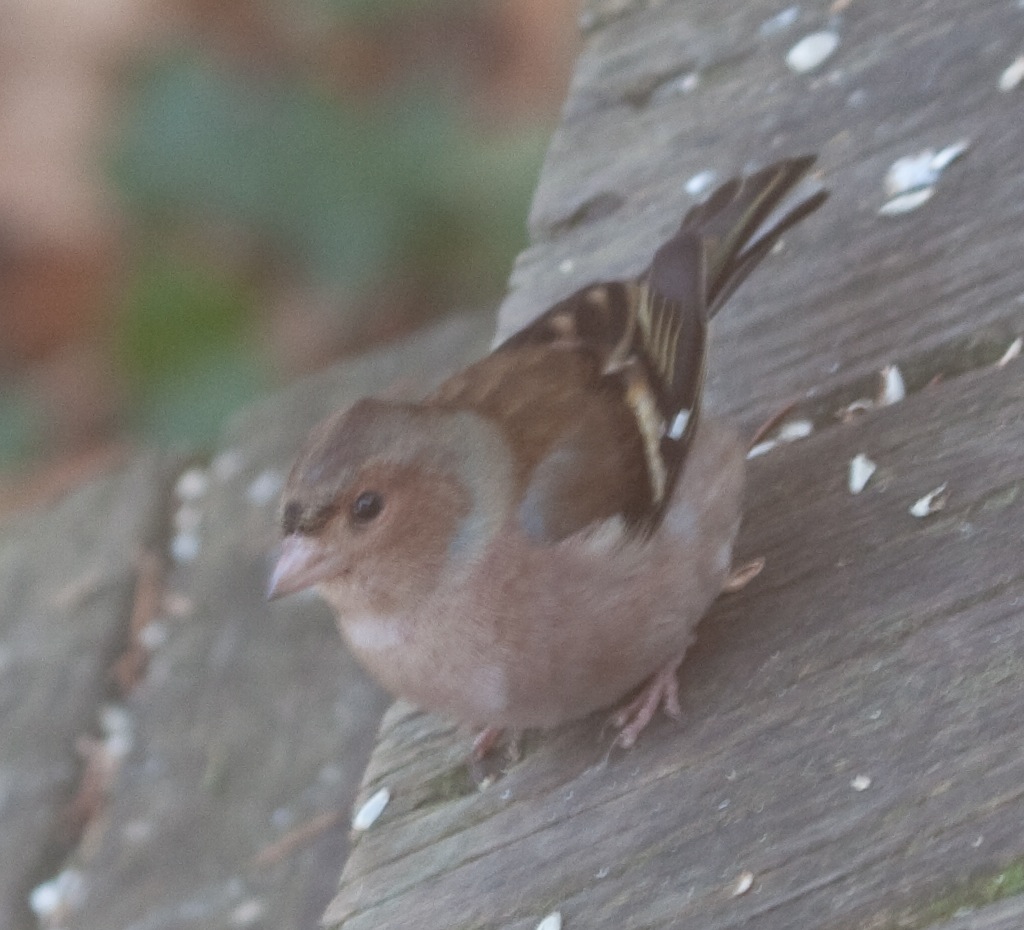
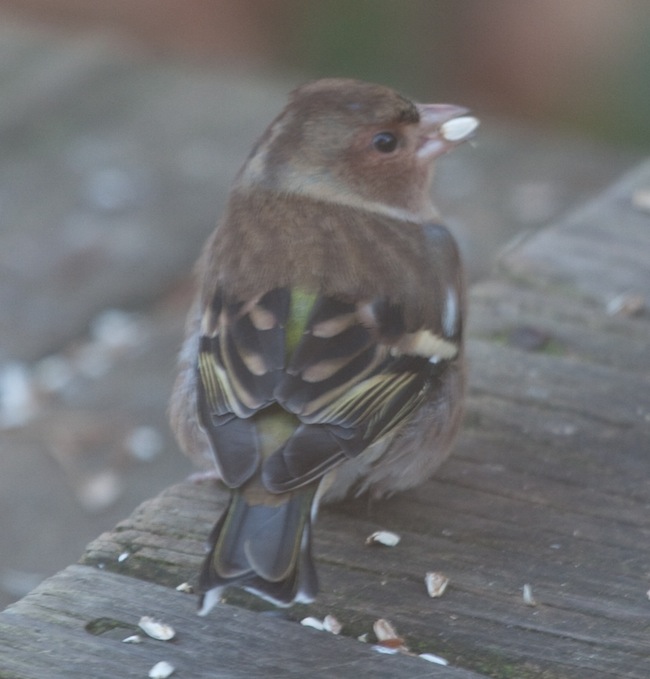
Unfortunately, our yard is not ideal for viewing, especially on the deck. There’s nowhere to stand outside (trees or feeders everywhere), so we immediately realized that it would not be possible to make the bird public. We discussed options for a little while, and I headed off to work.
I ended up running home on my lunch break. The first wave of additional visitors were either present or on the way. Having one of them being the only one to greet me was a bit surreal. The bird was very cooperative, giving plenty of chances to check for any anomalies (a couple primaries appeared missing or damaged but otherwise things were fine).
The afternoon had the first scare. Bob had returned (with a memory card for his camera this time) and was sitting around talking to my parents when they looked out and saw a Cooper’s Hawk sitting in the brush the bird had been perched on a few minutes before. When the hawk dove down, they all ran out and scared it off. No feathers and no obvious kill, but it was apparently a tense few minutes until he returned.
Once I got home for the day, I started sending out some invitations. For most of the next couple weeks, we had people in and out most of each day. Almost everyone saw the bird quickly (two people had an extended wait as the street was being dug up and a few needed a second trip as they had other commitments). I missed most of this, but did spend most of my weekends taking over the hosting.
Fortunately, the bird settled into a regular schedule pretty quickly and was normally in the first group of cardinals and white-throats of the day and again with them at dusk. This proved to be very good for the Greater Boston CBC. The CBC had to be postponed due to a snowstorm (which wiped out more than a couple other rarities in the circle) and as a result, the people I had asked to house sit and make sure we got the bird had to back out. Fortunately, he was on the deck just after 7, so we were able to meet the rest of the group at the scheduled start time.
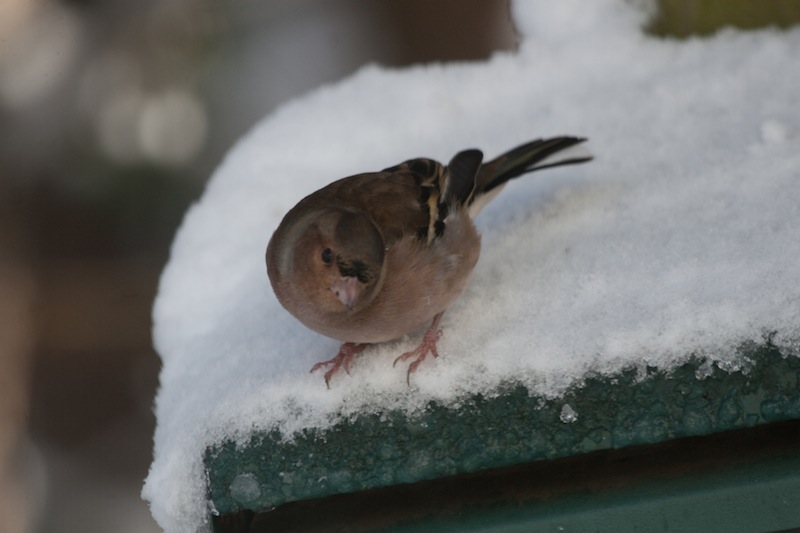
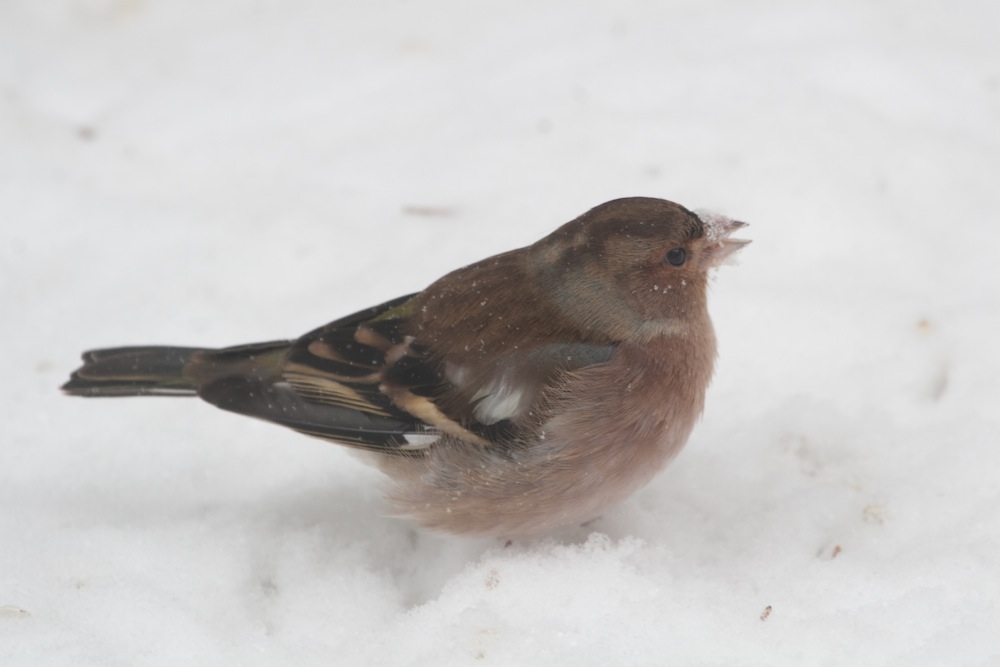
By the end of December, Harry (as we now called him to allow conversation in public without anyone else knowing) had discovered the feeder on the side of the driveway and started spending more time over there. It didn’t affect the views, but photography got much harder. He also started showing up a bit later in the mornings (but still regular, so this was a good change).
I took a trip into the MCZ collections at the end of December to go through a few specimens. In hindsight, this didn’t accomplish much but it’s always a fun thing to do. We did learn that the odd-looking feathers on the tail were actually normal.
Our 100th visitor came by on January 8th. Things slowed down a bit, but we still had people a couple mornings a week. Towards the end of January, he spent his first day away from the feeders but he was back the next day. Although various Accipiters had passed through most days (I could pick out at least 4 different individuals), the biggest scare came on January 29. Late in the afternoon, the Bloggerhead Kingbirds stopped by. A Sharpie passed through and the person at the window thought it may have chased him out of the yard. Since it was already late afternoon, we were unsure if the lack of a return visit meant anything, but the next morning was quite anxious. Fortunately, he came back and the 4 guests (all from out of state) got excellent views (I was getting close to getting a search expedition going for feather piles in the neighbors’ yards).
About few days before this, the latest North American Birds arrived. Flipping through, one of the first things I saw was a note about a number of Chaffinch sightings in Quebec over the summer (there’s a brief discussion in the Changing Seasons column that you can download at the link above, issue 63:3 but see page 390 if you have the magazine). With this information, banding the bird and getting a feather sample became a priority again. It had been discussed earlier and I was willing to try but didn’t push when nothing seemed to be arranged. But now I really wanted to know the origin, which may be possible with a stable isotope analysis.
After a few emails were exchanged, Trevor Lloyd-Evans, director of banding at Manomet, came by with a couple traps. We had a very pleasant afternoon talking, but no bird. The traps were out for a few days without any success (and possibly were scaring things away) so we pulled them and decided to use a mist net.
Unfortunately, this was right as we were heading to Texas. We asked our neighbors to keep the feeders filled and invited Marj to try and coordinate with Trevor but the timing didn’t work. Fortunately (and shockingly), I spotted Harry within an hour of getting home and we were able to arrange for the everyone to come by the next day.
I’ll post the banding story in more detail later, but things ran far better than expected. Instead of spending a day plucking House Sparrows as we planned, he was caught within 15 minutes (with 3 White-throats and no House Sparrows). Clearly not bothered by the experience, he was back within a couple hours of being released.
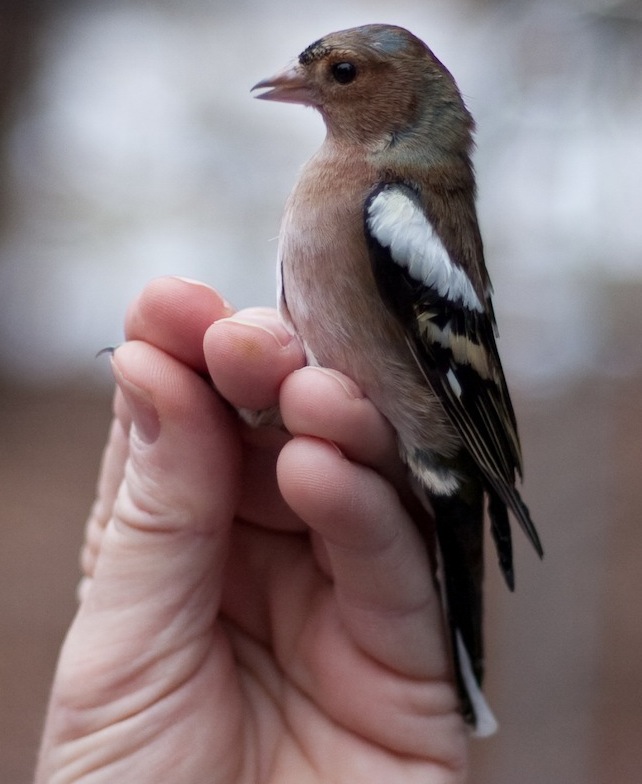
As it got warmer out, he tended to not show up in good weather. If there was a storm, he was around all day, but 5 minutes on other days was a lot. Even so, into the first weekend of March only one person had come by and not seen him. He sang for the first time (that I heard at least) on March 4 (as posted). That Saturday was the day of the Birder’s Meeting and 7 people stopped by before or after, all missing. Somewhat surprisingly as Sunday was a nice day, he made a brief appearance for 4 visitors (and was singing again, from across the street).
The huge rainstorm on the weekend of the 14th didn’t seem to bother him (he actually seemed to stay drier than most birds). Our last 3 visitors came by just before things got bad on Saturday and all had success. It appears that he headed off sometime that week as we did not see him in the lighter storm the following weekend (it was too nice in between to be sure, although I suspected he was gone as I had windows open and didn’t hear anything).
So that explains the last three and a half months. It was very enjoyable on the whole. Over 140 people were able to come by and in the end, only 6 did not see him (3 of those only put in about 15 minutes). Most were obviously from Massachusetts but we had people from as far as Georgia (and others from further made plans but had to cancel). There were a few days where I would have preferred to have slept in (or even just to my normal 7:00 wakeup) and there were days when going out would have been nice. Fortunately, it was winter so most birds didn’t go anywhere (and even without being reported for 2 months, the only real rarity, the Sage Thrasher, is included in that).
The people were all great. Everyone was friendly and appreciative. After the initial group, I relied on others to make suggestions and was able to invite a large majority of them. Everyone seemed to understand the situation and pretty much everyone went through me to invite others (instead of having them contact me). Vague word did get out, but I don’t think it was in any detail (a couple people mentioned hearing rumors that were not exactly accurate, and two people did get some details the first day but they would have been invited almost immediately anyway).
With that said, if something similar happens again, I hope I’ve moved to a location that allows for easier viewing from the street (and more parking). Not because I disliked dealing with all the people, but because it wasn’t fun having to keep things quiet and try to coordinate with everyone.
1. Similar to this recording.
It’s been an interesting 3+ months and since I’m telling other people they can start talking, I should have something up first. Much, much more in the next few days.
(Photos from 2/15)
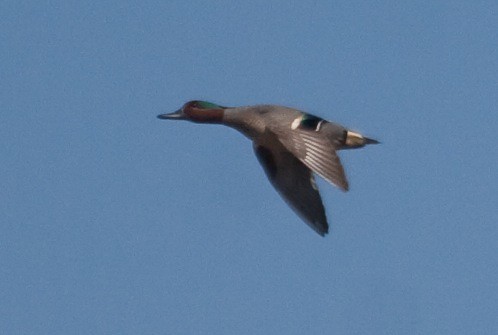
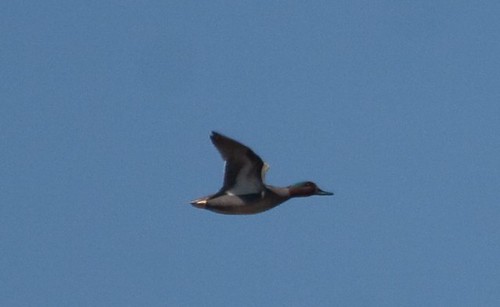
One of the highlights from this weekend was a Green-winged Teal that flushed and proceeded to fly circles around me for an extended period of time. Eventually it occurred to me to that when it made a close pass it was possible to get a photo. Surprisingly, a few came out.

Back from a fantastic trip to Texas. Much more coming soon, but after last year’s Ferruginous Pygmy-Owl/Ivory Gull back to back
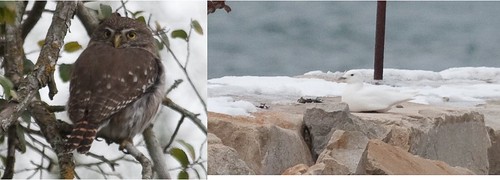
I got another odd combo. Probably actually a bit more likely as the two birds were close together and many others made the drive from one to the next:
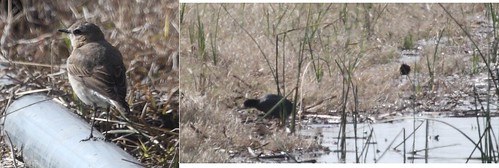
Unfortunately the first shot of the second bird wasn’t the best (it’s the dark blob facing away to the right of the coot), so I’ll include a later one that’s just a bit better.
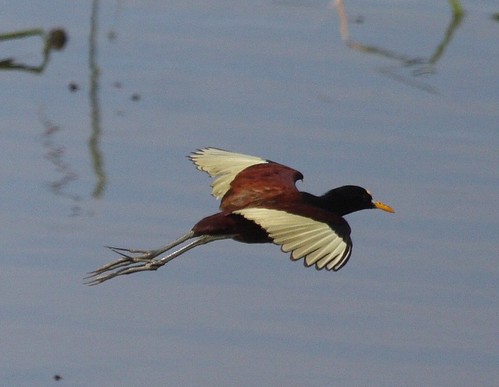
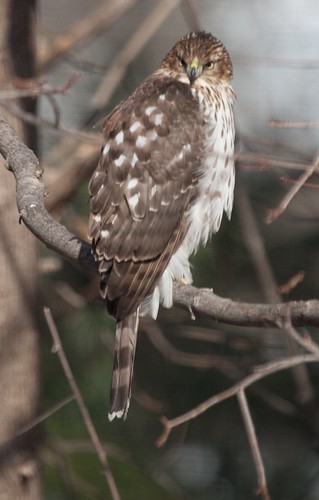
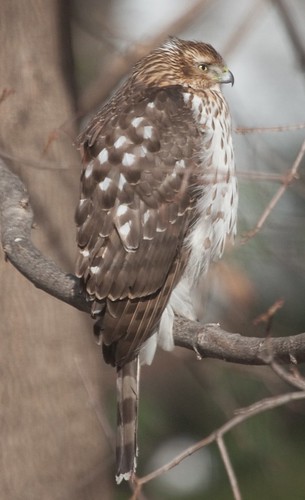
Believe this young Cooper’s is at least the 4th individual Accipiter in the yard this winter.
A week and a half this time as next week will be very different.
Tuesday 1/26: Beaver Brook ponds were flooded but had 2 Hooded Mergansers and a few American Black Ducks.
Wednesday 1/27: Charles, refound the Lesser Scaup and finally had a goldeneye for the year but very quiet otherwise. Not a single gull! Also had at least 25 Mallards buzzing around the neighborhood after sunset.
Thursday 1/28: Nothing of note.
Friday 1/29: Freezing cold but hit Lyman Pond quickly. It was frozen.
Saturday 1/30: Still freezing but checked Dunback briefly. Creeper and not much else.
Sunday 1/31: Plum with MBC. Snowy Owl (even further than last time), Rough-legged Hawk, Horned Lark, Bald Eagle, and lots and lots of ice and wind.
Monday 2/1: Beaver Brook North, nothing of real note.
Tuesday 2/2: Purgatory Cove: Lesser Black-backed Gull (last year’s bird back?) but no eagles.
Wednesday 2/3: Paine: creeper and not much else.
Thursday 2/4: Moody St, nothing much (no dark-mantled gulls at all)
Friday 2/5: Charles: scaup still around, 1 fish crow calling, fairly quiet otherwise.