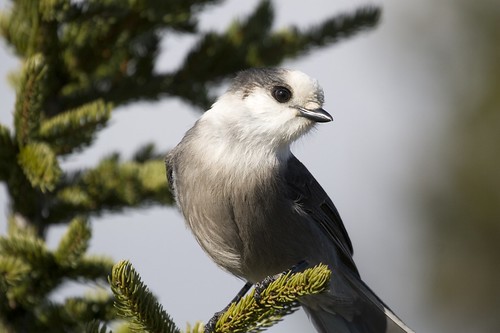
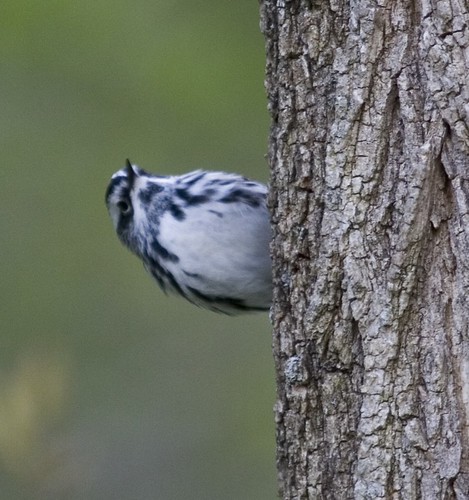
Gray Jay!

There’s been a Gray Jay at the top of Mt. Watatic for the last few weeks now. Of course,
I had a bunch of commitments and last Monday was the first day I could get up there. It
was cloudy and the mountain was covering with screaming kids and barking dogs. The bird
was seen before and after we were there, but not in the couple hours we spent at the
top. And to add insult to that, we tried taking the road down, ended up somewhere
totally wrong and then had to walk back up. The road was supposed to be easier than the
trail, but it turned out to be much steeper and was actually a good deal harder.

So today, we tried again. As we were getting out of the car, Fred Bouchard pulled up
with a few friends. We walked up together, which turned out to be good as
we kept the pace slow enough to not have any major issues. At the top, we found one
photographer who had been seeing the bird, although it wasn’t around at the moment.

We spread out a bit to look without success. The photographer found a Pine
Grosbeak, although he was the only one to see it. We did hear it well at least. After
running over for that, I returned to checking out the edge and very shortly after the
bird flew right in. Everyone else appeared to see it right at the same time. It soon
flew in to the group and grabbed food, moving off for a few minutes and then returning.
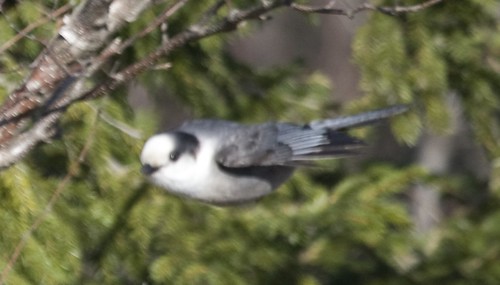
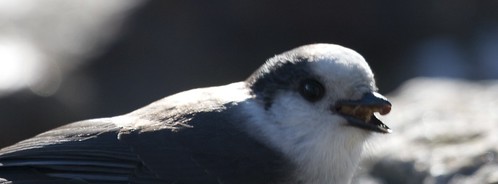
Gray Jay

Gray Jay with food

Gray Jay

Fred and his friends had to leave. We stayed around for a few minutes and not only did
the jay return, but it took peanuts directly out of my mother’s hand!
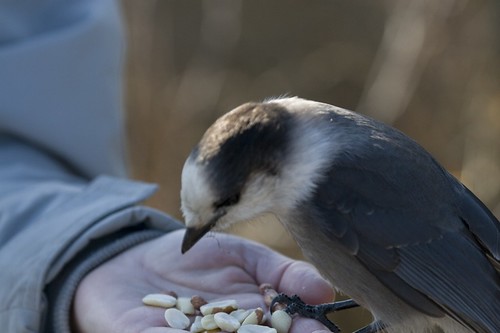
Gray Jay sampling food

The walk down was easy, at least after I stopped slipping on the ice at the top (there
was a little snow up there as well). I think only 5 species on the trip, but no
complaints.

I’m guessing it will be almost impossible to make it the hill in another week or two, so
go soon if you haven’t already.
Menotomy Photo Workshop

Catching up a bit.

Last weekend, I participated in the Menotomy photo
workshop. It wasn’t the best day (rather windy) and I was a bit short on time. The birds
weren’t overly cooperative either.

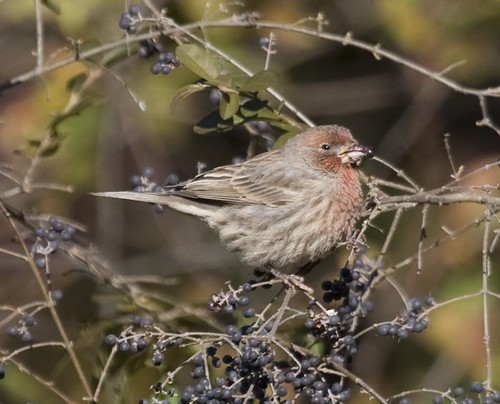
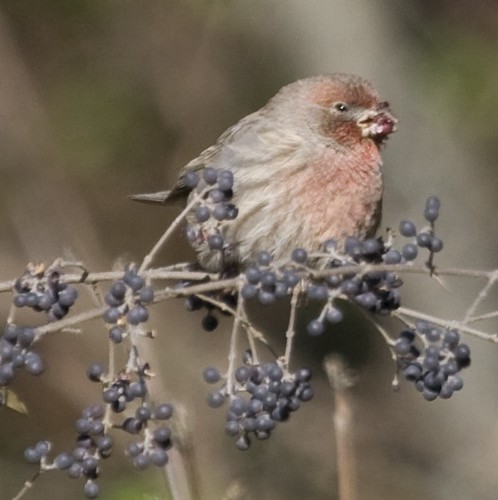
One House Finch was quite cooperative, letting us get good angles to the sun.

House Finch

House Finch

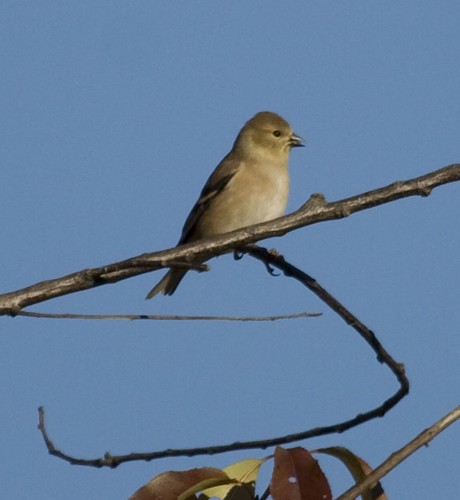
The goldfinch posed as well.

American Goldfinch

And just to show the amount of cropping involved on these shots, check the original.

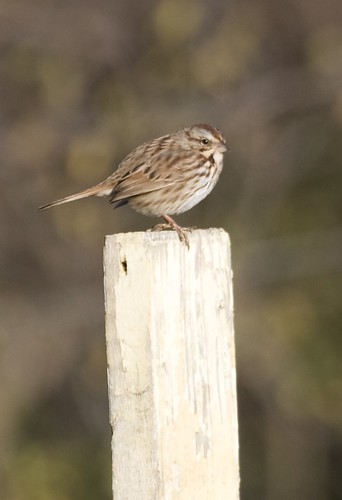
And a nicely posed Song Sparrow. The post was a bit ugly, overexposing it seemed to make
it look a little better.

Song Sparrow

You can see photos by other participants starting
here
. Under Photostream
on the right, keep clicking the bird on the right.

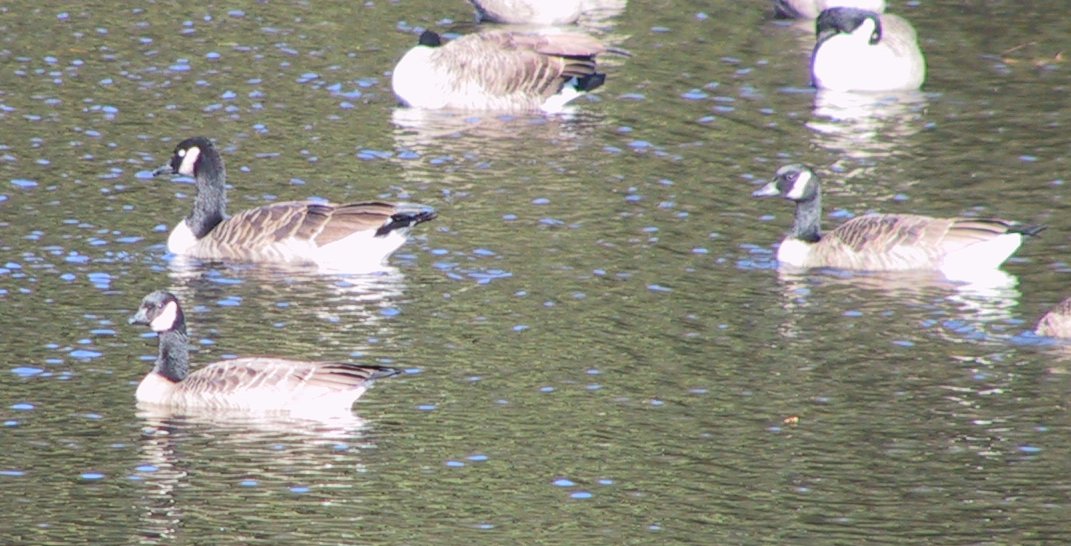
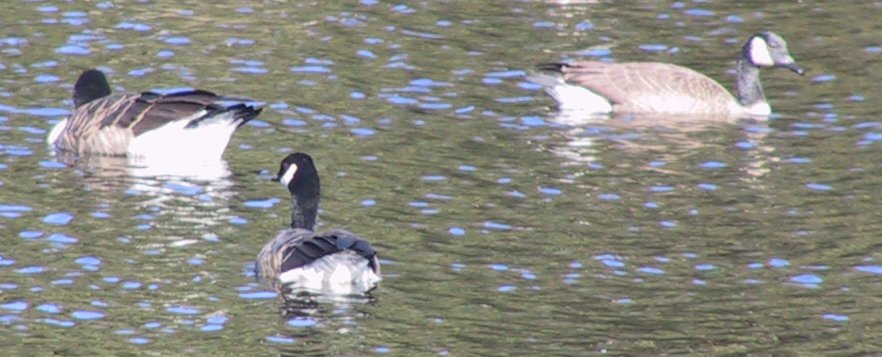
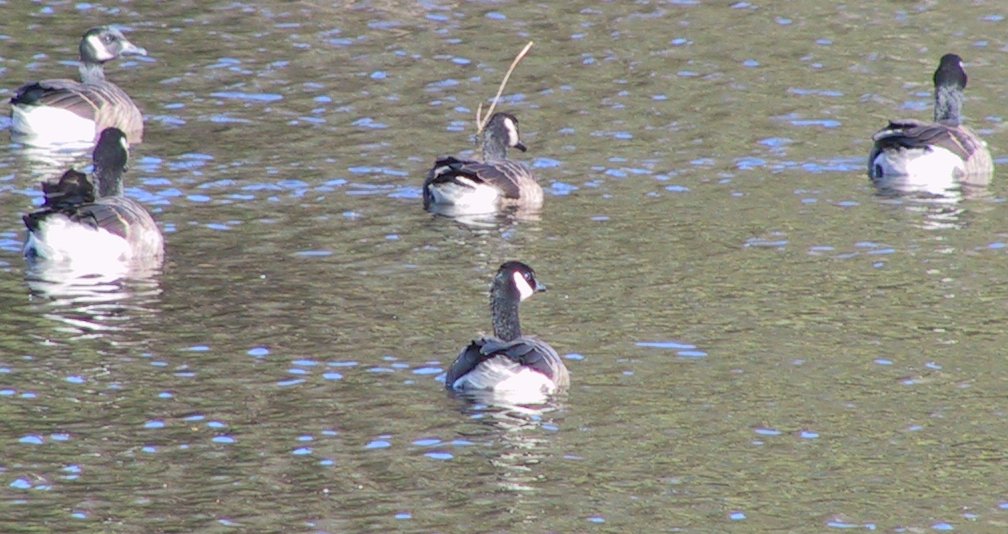
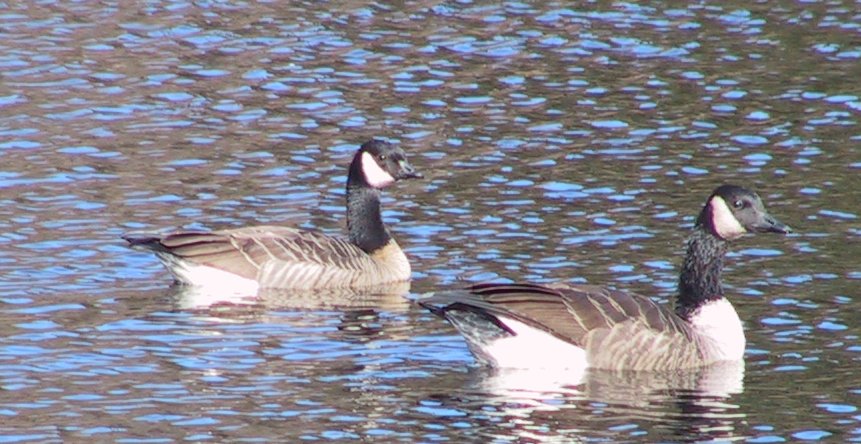
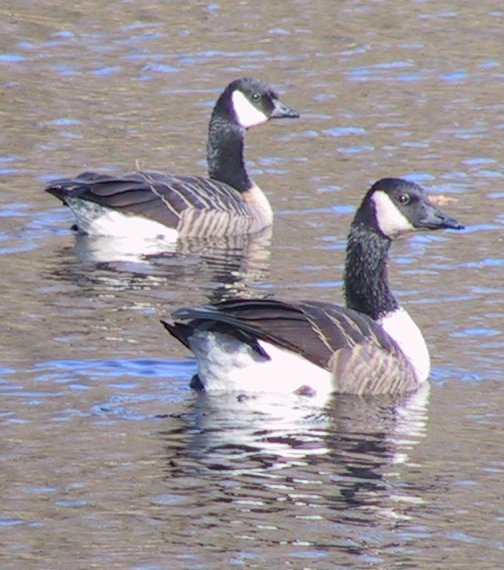
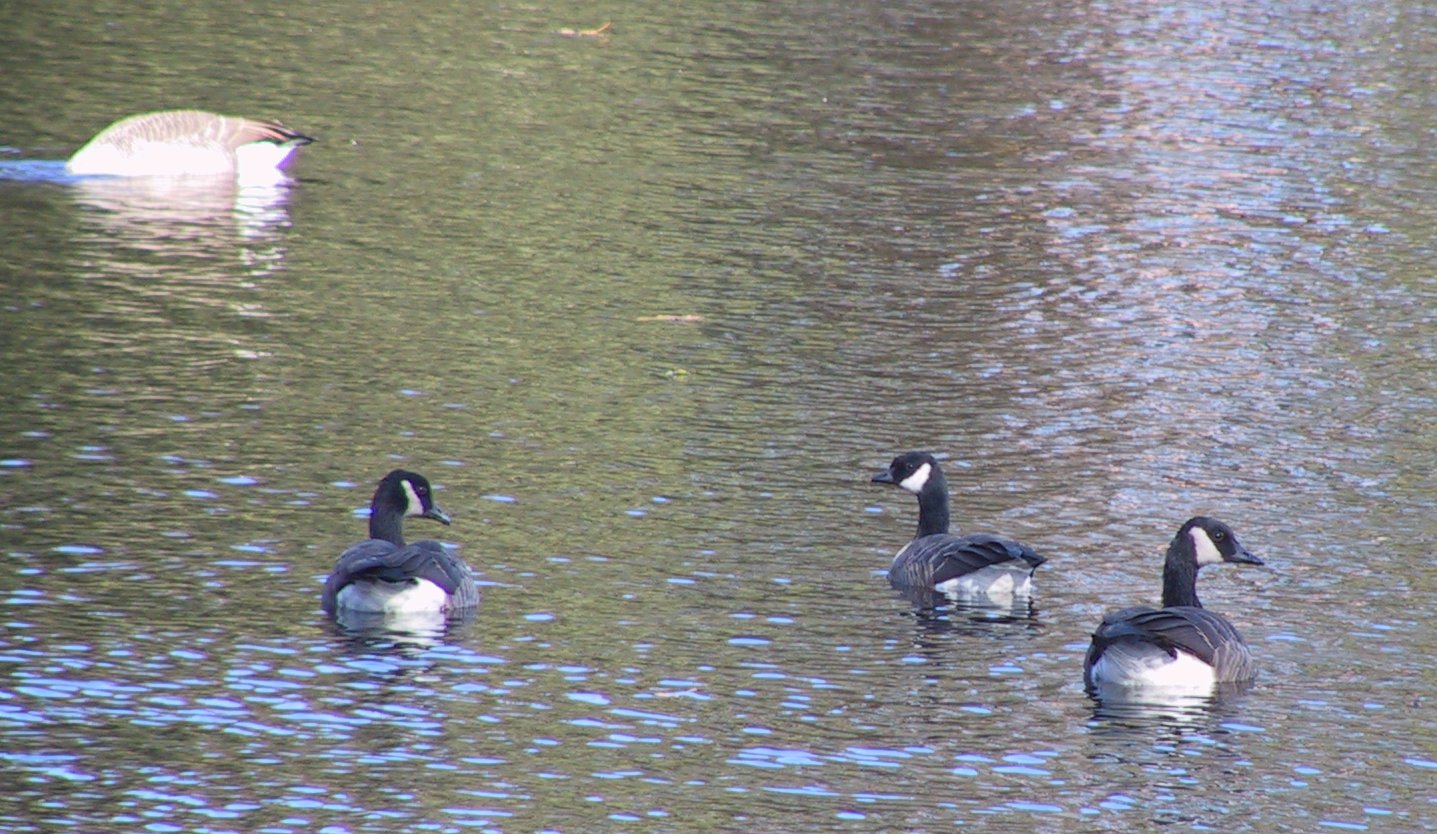
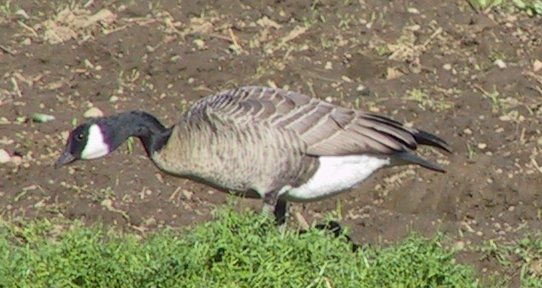
The Goose

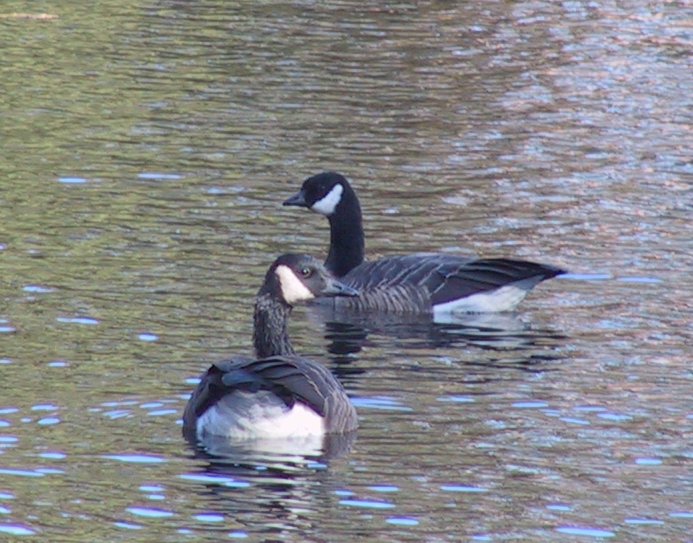
Note: This page was originally up in November 2004. I’ve put it back up to solicit opinions again. Last time was inconclusive, but with 3 year’s more study, we’ll see.

Canada/Cackling Goose – Waltham, MA, 11/2004

Sibley Discussion

Marj Rines’ photos (via Wayback Machine)

Glen Tepke’s

ID Frontiers discussion #15 and related

Also James P. Smith’s sighting of a Tavener’s Cackling Goose in Amherst (2009/11/10 can’t open the page)

Goose picture 1

Goose picture 2

Goose picture 3

Goose picture 4

Goose picture 5

Goose picture 6

Goose picture 7

Goose picture 8

Goose picture 9

The first 8 pictures were taken from a pond in a private apartment complex. The last
picture is from the UMass fields on Beaver St. The bird has been seen from the baseball
field at the intersection of Beaver St. and Waverly Oaks Rd. down to the pond behind the
Bentley fields. All pictures on this page were taken with a Canon Powershot Pro 90IS and
are probably overexposed.

First Impressions

Lately, David Sibley has been talking a lot about first impressions. Normally, I find my impression to be accurate. Occasionally I’ll think I’m wrong, study for awhile, and then end up back with my first thought. But occasionally you end up way, way off.

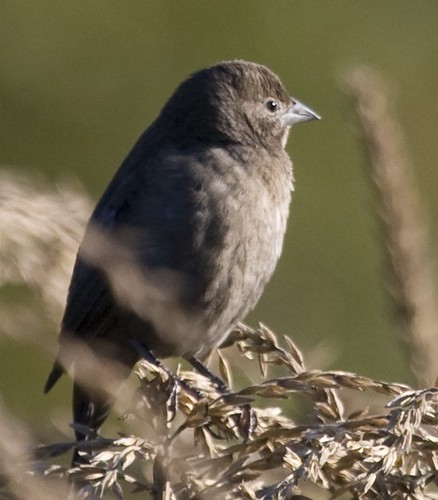
Sunday was a great example. I was leading a Menotomy walk at the Waltham St. Fields. Working the edge of the field was pretty slow, a few decent birds but they weren’t cooperative. We were working our way to the fields beyond the creek, when Karsten Hartel spotted a slightly larger bird perched at the top of a stalk of corn. He got a scope on it, and in poor light, we both blurted out Dickcissel.

We moved over a few feet to get it in better light and noticed that it seemed rather dark for a Dickcissel. Nothing else sprang to mind though. I snapped a few pictures and everyone started pulling out field guides. Obviously not a Dickcissel. Cowbirds looked somewhat close, but that just seemed wrong.

We watched a little more and couldn’t see anything to say it wasn’t a cowbird. The bill seemed a bit longer, so we considered Shiny, but dismissed it. It still didn’t feel right for Brown-headed, so we spent a good bit of time looking after it flew.

And then I got home and downloaded the pictures:

Cowbird

Suddenly it looks exactly like a Brown-headed Cowbird. Note that the upper mandible appears to be overgrown slightly and crosses, which throws the shape off slightly. At least the rest of the trip turned out well, lots of good looks at some nice birds
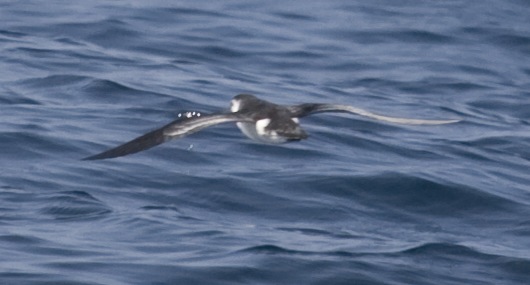
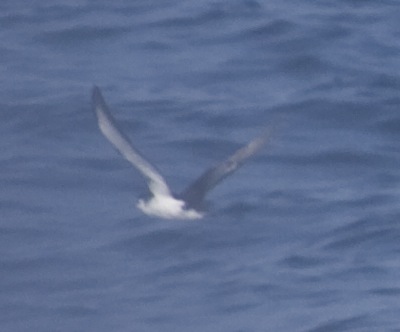
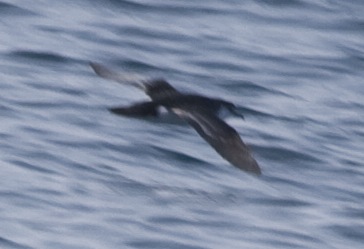
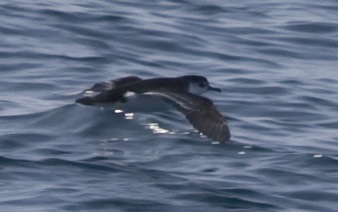
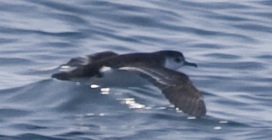
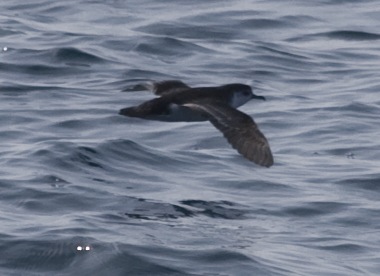
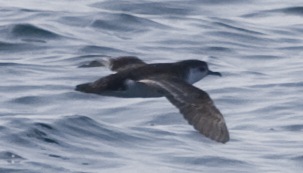
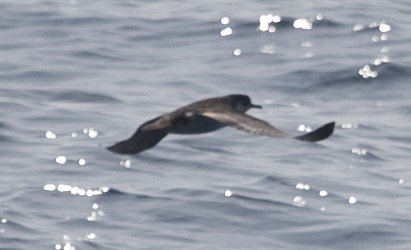
Macaronesian!

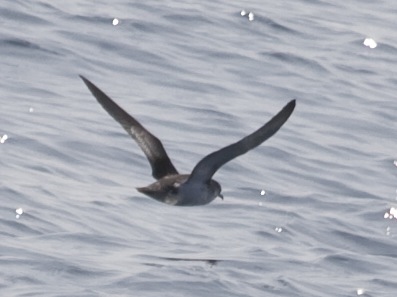
Shots of the presumed Macaronesian Shearwater (Puffinus baroli) from the BBC Pelagic trip Aug. 25, 2007. I’ll admit I barely looked at the bird. When it was first called as a Manx, I looked at the size of the crowd and decided to stay away and look for other birds. When the ‘this bird is very interesting’ call came over the loudspeaker, I fought my way in a bit and spent most of my time with the camera and not really studying the bird. I was towards the back of the crowd, not trying to push through, and frequently missed shots because someone ended up in front of the camera.

Plenty of other people were taking photos, they’re all being compiled onto one web page, which I’ll link to when it’s publicly announced.

Things to note in the photos:

  • the white face, especially around the eye
  • the small bill
  • the pale panel on the wings
  • white undertail coverts
  • very white underwing, with just a small bit of black along the edge

Note that someone started to move in front of me on the above shot, which explains the softness.

Two versions of the following two shots, the second of each has been brightened somewhat (these appeared too dark on a couple CRT’s that I checked but look good on LCD’s)


These next two shots were taken as the bird went near the sun, and are heavily backlit.

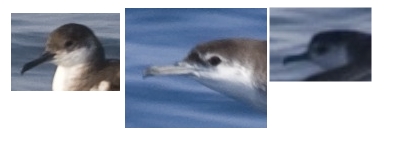
Besides the plumage characteristics, I’m struck by the shape of the head. Here’s a comparison of a Manx, an Audubon’s, and the above bird. The Manx was sitting on the water and does have its head turned slightly. The Audubon’s and Macaronesian are both in flight (Macaronesian has been blown up to 200%). The angle of the head meeting the bill seems to be tighter on the Macaronesian and the head has a very different peak. Is this a real difference or just an artifact of these few photos?

Shearwater heads

Early May Fun

Today was an excellent day, good birds everywhere. Starting at Arlington Res with just under 50 species, including 5 species of swallow, 6 warblers, and 5 blackbirds. A quick stop at Arlington Great Meadows was less productive (I was hoping for duskywings and elfins, but the clouds kept butterflies away), but I picked up a few more good birds including a Brown Thrasher, an Eastern Towhee, and a flyby Accipipter.

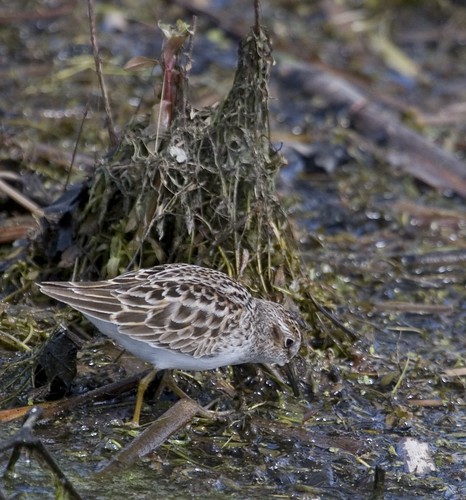
Later in the day, we headed out to Great Meadows in Concord. It was surprisingly slow, with only cormorants, mallards, geese, and swans on the water. A few Least Sandpipers made the trip worthwhile though.

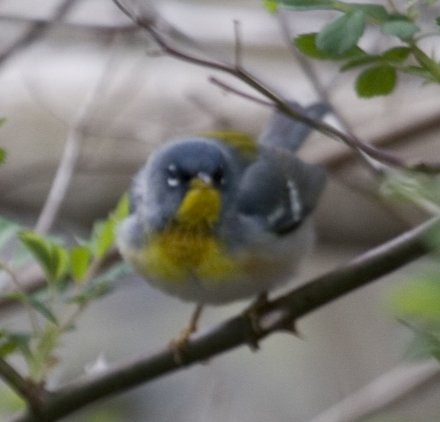
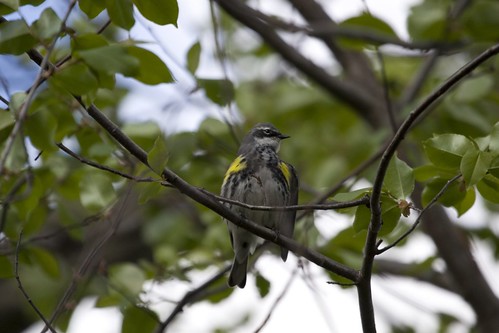
Quiz: which one’s which?

This parula was singing in a bush well below eye level, wish the shot was a little better.

And this guy was singing right above (and another to the side, and 3 more further, and …)

Now you see me

Now you don’t

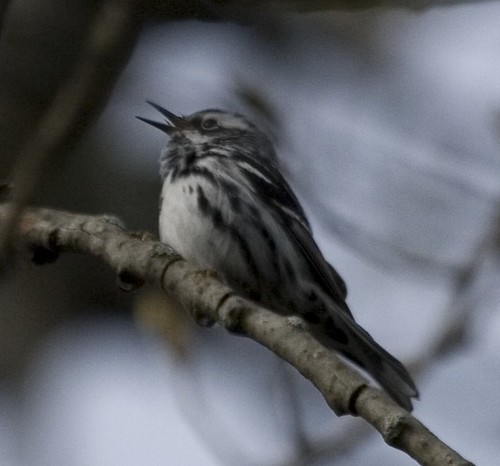
That got boring, so let’s sing instead.

No clue what this one was up to

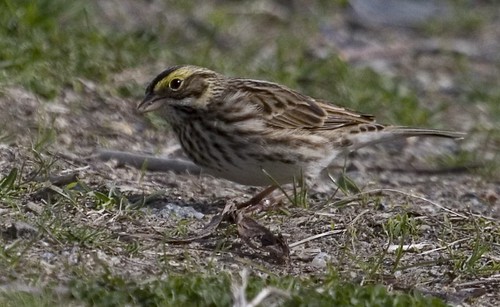
Savannah posed nicely.

As did this Least Sandpiper later in the day at Great Meadows.

Red-headed Woodpecker

The big prize:

Red-headed Woodpecker

Unfortunately, he never got closer than probably a hundred yards, so I couldn’t do much with the camera. Luckily, he was distinctive enough that I didn’t have to run back for the scope.

But before he was found:

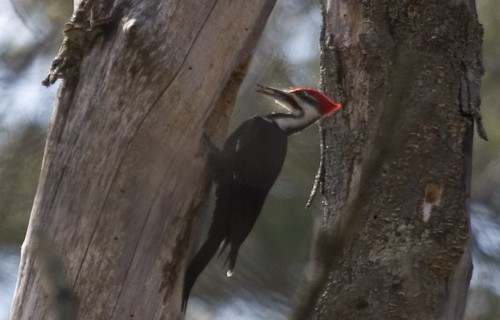
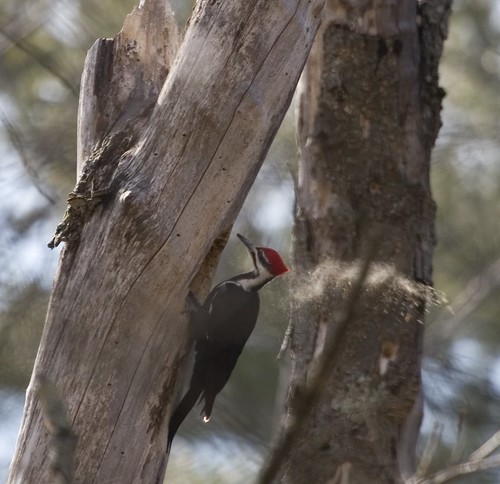
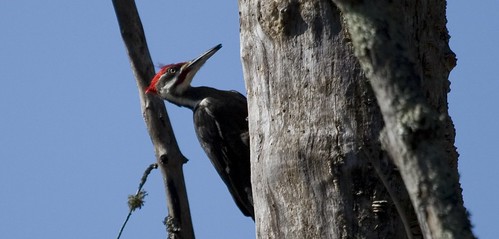
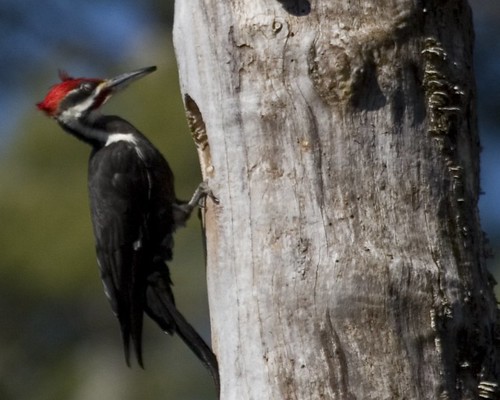
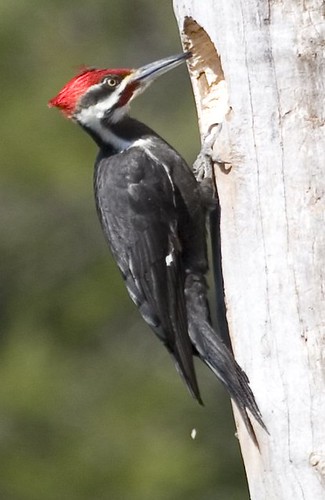
Pileated Woodpecker

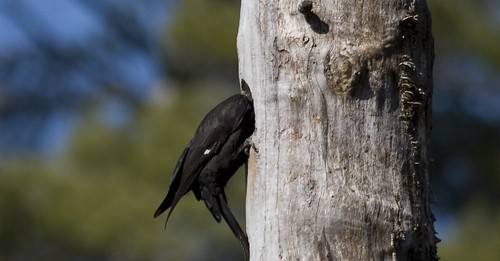
Pileated Woodpecker Excavating a Hole

Yes, that’s sawdust from him.

There were birds all over, including 6 species of woodpecker, singing Winter Wren, too many Tree Swallows to count, and this guy:

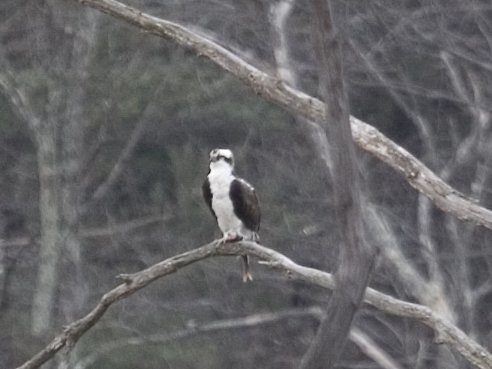
Osprey perched

Osprey with Fish

Even further than the woodpecker and after it had clouded over, but still was worth trying.

Owl Nest

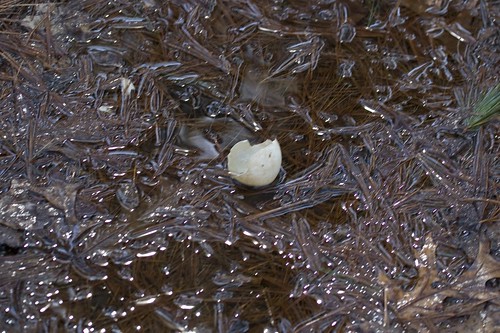
Among other things, I took a walk around Lyons-Cutler Reservation today. Walking through the woods, I noticed an eggshell on the ground:

Egg

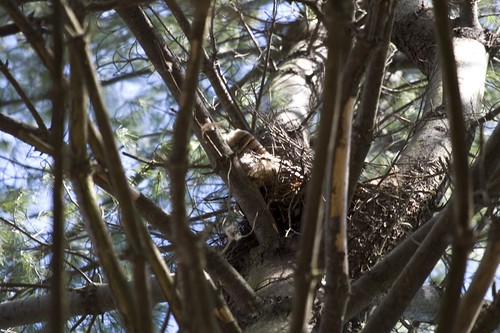
I started looking up and noticed a couple sticks in the tree right on the path. Looking carefully, a tail was visible:

Tail

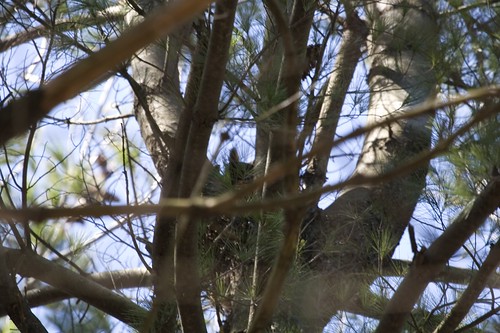
At this point, I was fairly sure it was an owl, but not convinced. I took a few steps off the path and couldn’t find the bird. A few more steps however:

Ear Tufts

Guess that confirmed it. That’s Block Framingham 4. If the owner of the block wants more details I can try, although it was pretty much see the egg and look up.

Also had at least 4 Great Blue Herons on the nest.

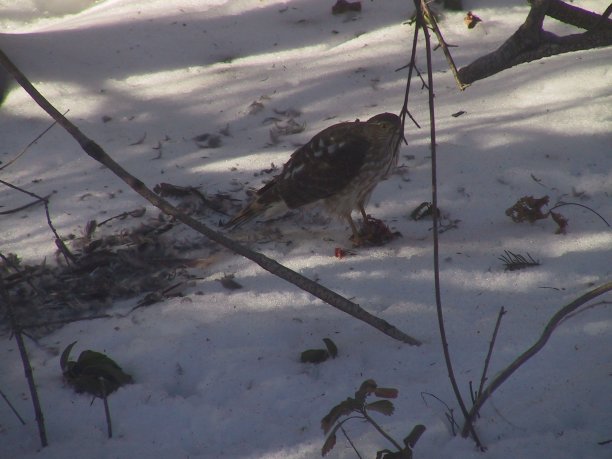
Yard Sharpie

Yard Sharpie with Mourning Dove remains


Unfortunately the dove was just about finished when I got home. Every last bit of meat was plucked off. After the hawk left, we walked over and looked around and could barely find a trace other than the feathers.

Watching the hawk as it finished was quite interesting. Working on the last piece appeared to be difficult. The bird was having trouble holding it down to rip off the meat and kept pulling it up from under its other foot. Eventually, it moved to a branch where it was able to hold it down. After finishing, it spent quite a while wiping its bill on the branches, before shaking off a few times and taking off.